
Introduction
When a business decides to build an app, one of the first questions is whether to create a native app or a web app. Both options can help businesses serve customers digitally, but they are not the same. Each has advantages, limitations, and ideal use cases.
Choosing the right option depends on your goals, budget, audience, features, and long-term plans. Some businesses need the performance and device access of a native app. Others need the flexibility and lower cost of a web app.
Understanding the difference can help you make a smarter decision before investing in development.
What Is a Native App?
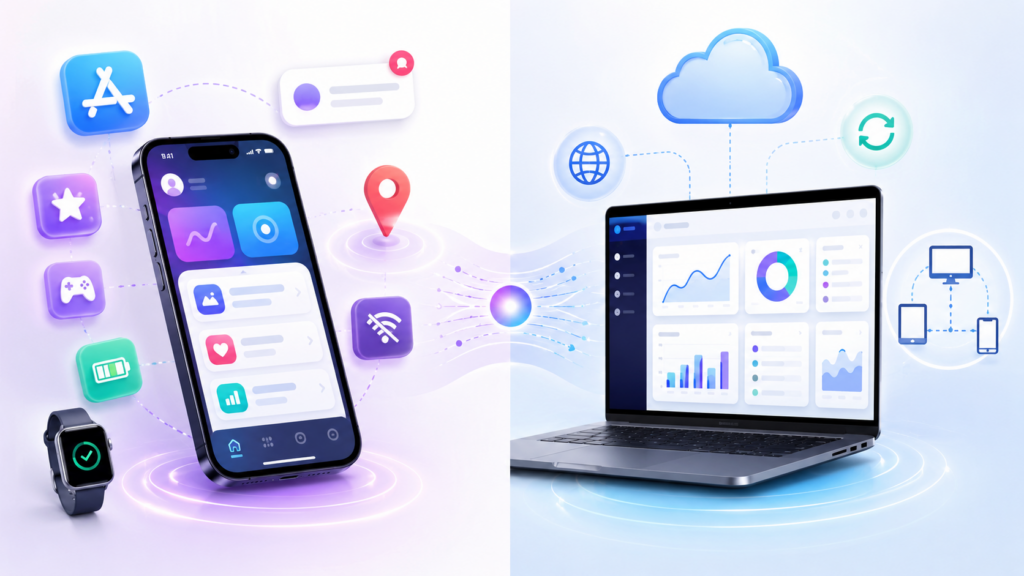
A native app is built specifically for a mobile operating system, such as iOS or Android. Users usually download native apps from app stores like the Apple App Store or Google Play Store.
Native apps are designed to work closely with the device. They can access features like camera, GPS, microphone, contacts, push notifications, Bluetooth, and offline storage. Because they are built for a specific platform, they often deliver strong performance and a smooth user experience.
Examples of native apps include banking apps, fitness apps, food delivery apps, ride-sharing apps, and social media apps.
What Is a Web App?
A web app is accessed through a web browser. Users do not need to download it from an app store. They simply open a website link on their phone, tablet, or computer.
A web app can look and feel like an app, but it runs through the browser. It is usually easier to update because changes can be made on the server and users see the latest version instantly.
Examples of web apps include online dashboards, booking systems, project management tools, customer portals, and browser-based software platforms.
Performance Comparison
Native apps usually perform better than web apps because they are built for a specific device and operating system. They can run faster, respond more smoothly, and handle complex features more efficiently.
This matters if your app needs advanced animations, real-time tracking, heavy data processing, camera features, or offline functionality. A fitness tracking app, delivery app, or gaming app may benefit from native performance.
Web apps have improved a lot, but they still depend on the browser and internet connection. For many business needs, this is not a problem. A simple booking platform, customer dashboard, or information portal can work very well as a web app.
User Experience
Native apps often provide a better mobile user experience. They can follow platform-specific design standards and feel natural on the device. They also support push notifications, gestures, and smoother interactions.
Web apps can also be user-friendly, especially when designed well. However, they may not feel as polished as native apps in some cases. Users may also need to remember the website address unless they save it to their home screen.
If customer experience is a major part of your brand, a native app may be the better choice. If your main goal is accessibility and simplicity, a web app may be enough.
Development Cost
Cost is one of the biggest differences. Native apps are often more expensive, especially if you need separate versions for iOS and Android. Each platform may require different development work, testing, and maintenance.
A web app is usually more affordable because it can work across devices through a browser. You build one main application that users can access from phones, tablets, laptops, and desktops.
For startups and small businesses, a web app can be a practical first step. It allows you to launch faster and test your idea before investing in a full native app.
Maintenance and Updates
Native apps require updates through app stores. When you release a new version, users may need to download the update. App store approval processes can also take time.
Web apps are easier to update. Developers can make changes directly, and users see the updated version the next time they open the web app. This makes web apps more flexible for businesses that need frequent changes.
If your product will change often, a web app may be easier to manage. If your app needs strong device integration, native development may still be worth the extra maintenance.
Accessibility and Reach
Web apps are easy to access because users only need a link. They do not need to download anything. This can reduce friction and make it easier for new users to try your service.
Native apps require installation. This can be a barrier for some users, but it can also create stronger engagement once installed. An app icon on a user’s phone keeps your brand visible and easy to access.
If your goal is quick access for a wide audience, a web app may be better. If your goal is deep customer engagement, a native app can be stronger.
Offline Functionality
Native apps are better for offline use. They can store data locally and allow users to continue using certain features without an internet connection.
Web apps usually need internet access, although some modern web apps can support limited offline features. Still, native apps are usually more reliable for offline functionality.
If your users need access in areas with poor internet, a native app may be the better option.
Security Considerations
Both native apps and web apps can be secure when developed properly. Security depends on development quality, data protection, authentication, encryption, and regular updates.
Native apps may offer stronger device-level security features, such as biometric login and secure local storage. Web apps can also use strong security methods, but they must be carefully protected against browser-based risks.
For businesses handling sensitive data, security should be planned from the beginning, regardless of the app type.
Which One Should Your Business Choose?
Choose a native app if you need high performance, offline access, push notifications, strong device integration, or a premium mobile experience. Native apps are ideal for businesses that expect frequent user engagement and want a strong presence on customer phones.
Choose a web app if you need lower development cost, faster launch, easy updates, broad accessibility, and cross-device support. Web apps are ideal for dashboards, booking systems, customer portals, internal tools, and early-stage product testing.
Some businesses eventually use both. They may start with a web app to validate the idea, then build a native app once there is proven demand.
Conclusion
There is no single best choice for every business. Native apps and web apps both have value. The right decision depends on what your users need and what your business wants to achieve.
A native app can offer better performance, deeper engagement, and stronger mobile features. A web app can offer faster development, lower cost, easier updates, and wider access.
Before choosing, define your goals, audience, budget, and required features. With the right strategy, either option can become a powerful digital product for your business.